★★★★★4.6 (477)
Get Yours
Dog Poop Bags with Handles
$15.95
In stock
The logbook
A dog walk fails in small, preventable ways: a split seam on a cold morning, an empty dispenser clipped to the leash, or fur clinging to your coat before you leave the entryway. Building a kit that holds up requires paying attention to bag construction, proper sizing, and realistic disposal routines.
Thickness determines whether a pickup feels manageable or precarious. Thin films stretch, transmit heat instantly, and puncture against gravel, twigs, or rough pavement. When a bag has sufficient gauge, it maintains structure while you wrap it around your hand, invert it, and close the top.
Our handle bags are 18 microns thick, providing reinforced protection against tears and messy leaks. That extra gauge makes a noticeable difference with larger dogs or rough ground. A sturdy bag isolates waste completely, so you can walk the remaining mile without worrying about seam failure.
Closing a bag is not the same as securing it for a long carry. Flat bags rely on a traditional overhand knot near the opening, which requires enough slack at the top. Bags with built-in handles give you direct tie ends that pull shut cleanly without compressing the contents or dirtying your fingers.
Our flat waste bags measure 9 x 13 inches, providing spacious volume for small to large dogs. For owners who prefer tie handles, the handle version measures 9 x 13 inches across the usable area and over 16 inches including the handles. Both styles are naturally unscented, avoiding artificial fragrances or added chemicals entirely.
Checking your dispenser cavity before ordering replacement rolls prevents mid-walk jams. Perforated rolls need to spin freely inside a housing so each bag tears cleanly at the line without dragging the entire roll through the slot.
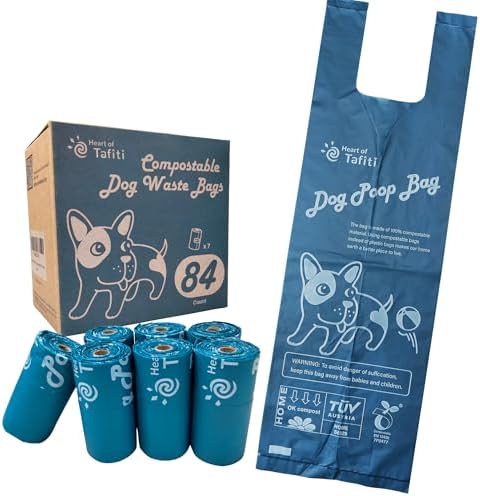
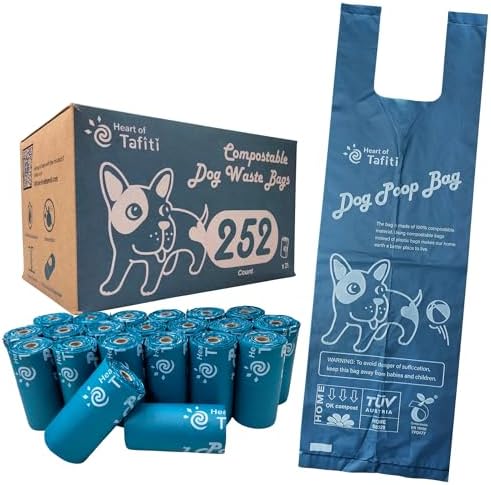
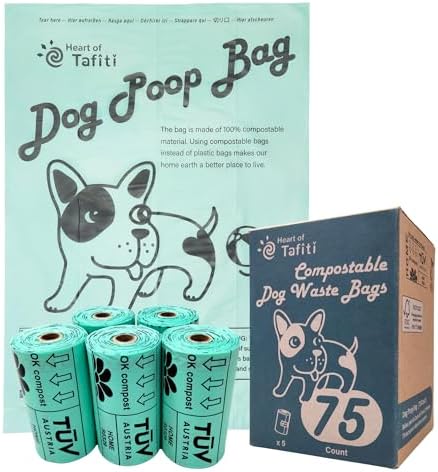
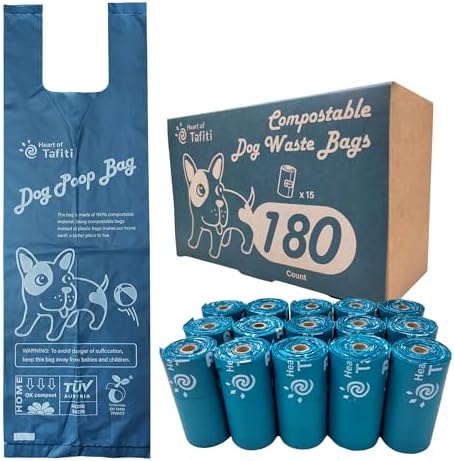
Flat bags come in 75 count, 180 count, and 255 count formats designed to fit standard leash dispensers, belt clips, or coat pockets. Handle bags are supplied in 84 count, 180 count, and 252 count options. Match the roll count to your carrier size so you never have to force a fresh roll into a tight container.
Plant-based materials behave differently from conventional plastics. Our waste bags are certified by TUV Austria under OK Compost HOME standards and meet ASTM D6400 in the US, confirming they break down in home compost environments without leaving synthetic plastic behind.
Disposal context still matters. Tossing a compostable bag into a public municipal trash can sends it to a conventional landfill, where lack of oxygen prevents proper composting. Choosing plant-based bags reduces single-use plastic production at the source, but achieving true compost requires a dedicated home system or an accepting local organics stream.
Spares belong anywhere a walk might begin. Keep one roll clipped to the primary leash, a backup pack in the car glove compartment, and two loose bags in your winter jacket pocket. Relying on a single dispenser guarantees an empty roll at the worst point along the trail.
Returning indoors brings the other side of dog ownership. Our mini pet hair remover uses a rhombic tool with rubber blades that grip embedded fur on car mats, furniture, and clothing using short strokes, washing clean with water. For broader indoor surfaces, our reusable white roller uses dual rubber strips and an internal capture chamber with a push-button release, clearing coats, car seats, and couches without adhesives or batteries.